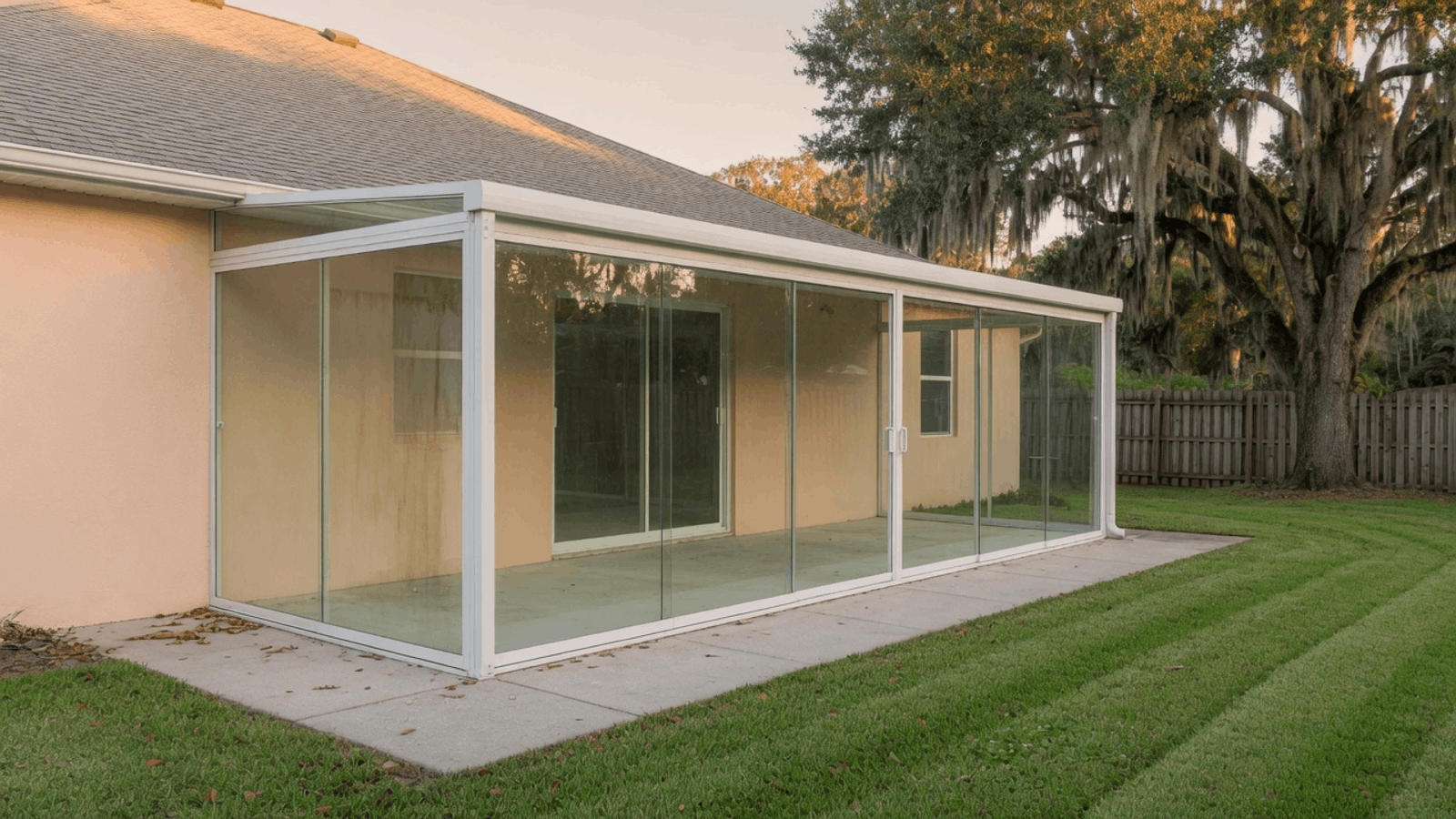
This site publishes two ends of the glass-and-panel range. A three-season conversion of an existing lanai, vinyl or acrylic panels, runs $8,000 to $20,000. A conditioned glass sunroom runs $22,000 to $45,000. Putting glass on an existing aluminum frame has no verified local band of its own.
Your final price still depends on opening size, glass type, framing, doors, foundation work, permits, and whether you want weather protection or a fully conditioned living space. Two lanais with similar footprints can require very different work.
What determines the cost of a glass lanai enclosure?
The existing structure makes the biggest difference. A sound roof, slab, and aluminum frame may provide a workable starting point. Damaged framing, uneven concrete, or weak attachment points can add substantial preparation.
Opening size also matters. Large openings need more glass and stronger supporting members. Complex layouts require additional measurements, custom fabrication, and installation time.
The glass package changes both price and performance. Basic glass provides a physical barrier against rain and insects. Insulated or solar-control glass can reduce heat transfer and glare. Safety glazing or impact-resistant assemblies cost more where the design requires them.
Doors create another pricing variable. A simple hinged door differs from a wide sliding system with multiple moving panels. Larger doors need heavier frames, careful alignment, and dependable water management.
The intended use matters just as much. A protected sitting area has different requirements from a room connected to the home’s cooling system. Homeowners planning a permanent living area should review the options for converting a lanai into a sunroom.
Does an existing screened lanai reduce the price?
An existing screened lanai can reduce the price if its main components remain suitable. The roof, slab, columns, beams, and attachment points must be evaluated before glass replaces lightweight screening.
Screen panels allow air to pass through. Glass catches wind and transfers that force into the surrounding structure. A frame that worked well with screens may need reinforcement before supporting enclosed glass panels.
Water control deserves equal attention. The enclosure needs a practical way to handle wind-driven rain, roof runoff, and moisture near the slab edge. Existing drainage problems rarely disappear after adding glass.
These conditions commonly affect the quote:
- Corroded, bent, or undersized framing may need repair or replacement.
- An uneven slab can complicate tracks, doors, and weather seals.
- Poor roof drainage may require corrections before enclosure work begins.
- Electrical outlets or fixtures may need protection or relocation.
- Openings with unusual shapes often require custom-built components.
A contractor should inspect these details before offering a firm scope. Photos help with early discussions, but they don’t replace an on-site evaluation.
Is a three-season enclosure cheaper than a sunroom?
A three-season enclosure is generally less expensive than a fully conditioned sunroom. It normally focuses on shelter, ventilation, and flexible use without turning the lanai into conventional indoor space.
Many systems use sliding or removable panels. Homeowners can open the room during pleasant weather and close it during rain, pollen, or cooler evenings. Explore the practical differences through the three-season room options.
A sunroom usually involves a more complete building envelope. Insulation, energy-efficient glazing, air sealing, electrical changes, and cooling considerations can expand the scope. Connecting the space directly to the home may also affect design and permit requirements.
Define the room’s purpose before comparing quotes. Paying for indoor-room performance makes little sense if you mainly want rain protection. Choosing a light enclosure also disappoints if you expect year-round indoor comfort.
How do permits affect the total project?
One line item worth settling early is glazing. Whether the glass has to be impact rated turns on a code test, not on a preference, and there’s an exception written for a room built under an existing roof. Our guide to the wind-borne debris region in Polk County covers it.
Permits can affect design work, documentation, inspections, and project timing. The exact path depends on the existing lanai, proposed glass system, structural changes, and intended room use.
A straightforward panel conversion may follow a different review path than a structural rebuild. Adding conditioned space can introduce further requirements because the room begins functioning more like part of the home.
Ask each contractor to state who handles permit preparation and inspections. The quote should also explain whether engineering or product documentation is included. That prevents an inexpensive-looking proposal from becoming incomplete later.
Contractor credentials matter too. Before work begins, review how to verify screen enclosure contractor licensing and confirm the company’s current qualifications for the proposed scope.
Lakeland Outdoor Pro is a referral service, not the contractor performing the work. The licensed screen enclosure and aluminum contractors we send assess the property and provide their own recommendations, pricing, and agreements.
How can I compare glass enclosure quotes fairly?
Start by making sure every contractor is pricing the same outcome. One proposal may cover basic glass panels, while another includes structural reinforcement, upgraded doors, permits, and finish work.
Ask for clear descriptions of the glass, framing, door system, screens, seals, drainage details, and preparation work. Confirm what happens to damaged framing discovered after work starts. The agreement should identify exclusions as clearly as inclusions.
Also compare how each design manages Florida heat. A low initial price may lose its appeal if the room traps afternoon sun and feels uncomfortable. Shade direction, roof insulation, ventilation, and glass performance all influence daily use.
Don’t judge proposals by the final total alone. A complete scope gives you a better comparison and reduces surprises.
Frequently asked questions
Is glass more expensive than rescreening a lanai?
Yes, glass enclosure work is generally more expensive than rescreening. Glass adds heavier materials, weather sealing, structural evaluation, and more complex doors or framing.
Can I add glass to my current aluminum frame?
Sometimes, but the existing frame must be suitable for the added weight and wind load. The pros we send can inspect its condition, dimensions, attachments, and overall design.
Does enclosing a lanai add air-conditioned living space?
No, not automatically. Adding glass doesn’t by itself make the lanai conditioned living space. Insulation, cooling, electrical work, permits, and building-envelope details may also be necessary.
Can sliding glass panels lower the project cost?
They can, depending on the system and performance goals. Flexible panels may require less work than creating a fully insulated room, but opening size and structural needs still affect pricing.
What is the fastest way to get an accurate estimate?
The fastest reliable method is an on-site assessment. Clear measurements, photos, intended use, and an inspection of the slab, roof, and framing produce a more useful quote.
Call (863) 777-5379 to get matched with a licensed local enclosure professional.