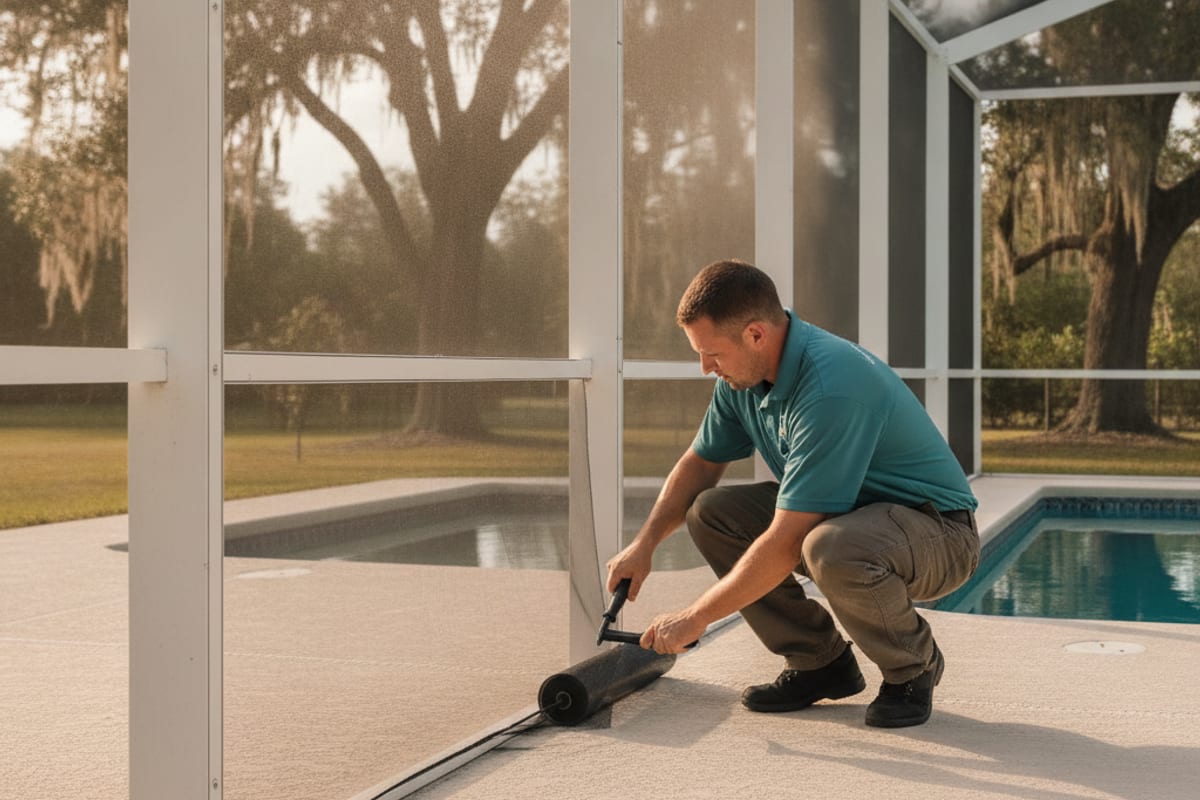
A rescreen replaces the consumable part of a pool cage: the mesh and the spline that holds it. The aluminum is the structure. If that structure is sound, you are buying fabric, fasteners, access, and labor, not a new engineered enclosure.
This site’s published full-cage rescreen band is $1,400 to $3,200. That is a published range, not a bid for your cage.
The number that compares two bids is not the size of the deck. It is the area of actual screen: walls and roof, panel by panel. A modest deck under a tall mansard can carry more mesh than a larger low cage. Ask for that screen-area figure on the quote, and ask what the number includes.
Pool cage rescreening is that mesh job. A new pool screen enclosure is a different product.
One advertised Lakeland example, with its limits
On September 5, 2026, Pool Screens R Us advertised on its Lakeland page: roof sections $85, side sections $60, bottom sections $40, a $185 material and labor minimum, and a full rescreen of $2,500 to $4,500 depending on screen area. That page also describes, with a rescreen, pressure-washing the aluminum inside and out, washing the pool deck, replacing cement anchors, and updating door handles and closers.
That is one provider’s advertised example on that date. It is not our price. It is not a Polk County average. It is not a guaranteed bid for your cage.
Compare inclusions before you compare totals. A quote that is only mesh and spline is not the same job as a quote that washes the frame, replaces anchors, and changes door hardware. A flat total is not dishonest because it is not per square foot. It is incomplete if you cannot tell which panels, which fabric, and which extra work are in it.
What actually moves the number
Screen area, not deck area. Have them measure the screened walls and roof. Deck square footage is the wrong proxy.
Panel scope. A few torn panels is a repair. A full elevation or a full cage is a different setup. New mesh will not match sun-faded mesh, so scattered patches are visible from the deck even when they are the smaller ticket. That is an appearance choice, not a half-cage price rule.
Mesh. 18x14, 20x20, PetScreen, and Glas-Shield are different fabrics. Name them on the quote. A tighter weave, a vinyl-coated polyester, or a laminated lower panel changes material and labor. Mixing fabrics is allowed. It is not a savings guarantee.
Height and access. Anything above a low single story means more setup. A slope, a spa bay, or landscaping grown into the frame slows the same panel count.
Frame, channel, and fastener condition. Packed spline, grit in the groove, bent members, and tired anchors are extra work, or they are a stop. New mesh on a racked frame or on anchors pulling out of the deck is the wrong sequence. That finding moves you to screen enclosure repair before fabric.
Cleanup and hardware. Hauling old mesh, washing the aluminum, washing the deck, and door closers or handles may or may not be in the number. The Pool Screens R Us example above includes several of those items. Another bid may not.
Sequence if the frame also needs coating
If the aluminum needs recoating and the mesh is coming off anyway, do the coating first, then the replacement mesh.
Overspray on new screen wastes the rescreen. Pulling the old mesh first also opens the channels and the inside faces of the members. Coordinate both scopes so one crew is not painting around fresh fabric.
Chalked finish is not, by itself, proof the frame is done. Loose mesh and a spline that has crept out of the groove are condition clues. They do not prove a UV calendar, a rental-wear cycle, or a soil diagnosis. Inspect the cage you have.
Timing, permits, and what this page will not promise
Access, height, panel count, channel cleaning, and whether coating is sequenced all move the schedule. Those variables decide the duration. Not a one-day promise.
On permits, like-material mesh replacement, structural-member work, pool-barrier changes, and a new enclosure can be different permit questions. Have the contractor confirm the exact work with the issuing jurisdiction before work begins.
Frequently asked questions
How much does it cost to rescreen a pool cage in Lakeland?
This site’s published full-cage rescreen band is $1,400 to $3,200. That is a published range, not a bid. Use screen area, panel scope, mesh, access, frame condition, and inclusions, then compare bids on that basis. The dated Pool Screens R Us Lakeland example above is one advertised snapshot with its own inclusions, not our price and not a market average.
How long does a rescreen take?
It depends on height, access, how many panels come off, whether channels need cleaning, and whether coating is done first.
Should I upgrade to 20x20 while the mesh is off?
If smaller insects are the goal, 20x20 has to be part of a whole-enclosure mesh and gap plan. One water-facing 20x20 wall does not close the rest of the cage. See the mesh comparison.
Can I rescreen a cage that someone else built?
If the channels are intact and the aluminum is not bent or corroded through, rescreening does not depend on who built the original cage. A crew should still check the frame and anchors before they install new mesh.
Does rescreening need a permit?
Like-material mesh replacement, structural-member work, pool-barrier changes, and a new enclosure can be different permit questions. Have the contractor confirm the exact work with the issuing jurisdiction before work begins.
If the mesh is failing a fingertip test and you want a number from the screen you actually have, call (863) 777-5379. Lakeland Outdoor Pro connects you with licensed and insured local crews who will measure screen area and look at the frame before they quote fabric.