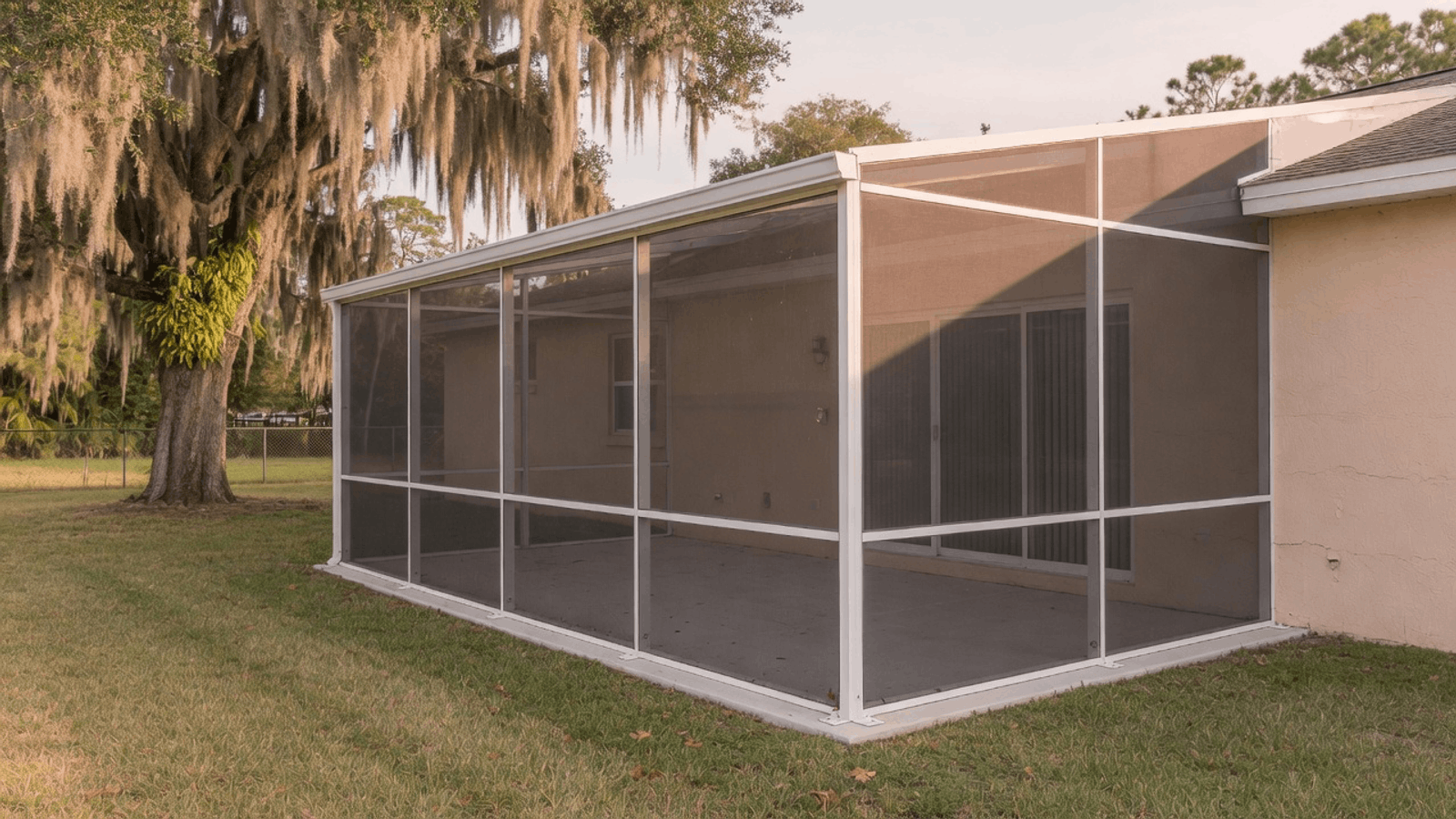
Screen enclosure insurance coverage usually comes from your homeowners policy, but only for damage caused by a covered event. Coverage depends on the enclosure’s classification, the damaged materials, policy exclusions, your deductible, and settlement terms.
Is a screen enclosure covered by homeowners insurance?
A homeowners policy may cover an attached screen enclosure as part of the dwelling. A detached enclosure may fall under coverage for other structures. Your policy’s wording controls that classification.
The declarations page offers a helpful summary, but it isn’t the whole contract. Review the coverage forms, exclusions, endorsements, and deductible provisions. Those sections explain how the insurer treats your enclosure.
Pool cages can receive different treatment from an enclosed living area. Some policies distinguish between the aluminum framing, roof panels, screen mesh, doors, and attached components. That distinction matters after a storm.
Ask your agent how the policy classifies the exact structure. Describe whether it connects to the house, covers a pool, or stands independently. Photos and permit records can help clarify what was insured.
What a Florida declarations page actually asks you to read
Florida homeowners policies treat a screen enclosure as its own line more often than a generic national form does. Open the declarations page and read the screened-enclosure line, then any hurricane endorsement that names an enclosure, a separate cap, or a hurricane deductible. Those lines decide whether mesh, aluminum, or both are in play. Do not assume “I have homeowners insurance” answers it.
We do not quote a named carrier here. Your policy is the primary text. The Florida Department of Financial Services publishes homeowners policy-endorsement material. Use that and your own contract.
If a storm already hit the cage, pool cage storm damage and Florida insurance covers what to photograph before anyone touches the structure.
What kinds of screen enclosure damage may be covered?
Coverage usually depends on the cause, not just the damage itself. Sudden damage from a covered event has a stronger basis than gradual deterioration.
A policy may respond to wind, falling branches, flying debris, fire, or another listed cause. The event must still meet the policy’s definitions and conditions. Wind or hurricane damage may also carry a different deductible.
Wear, corrosion, neglected fasteners, and long-term water intrusion are commonly treated as maintenance issues. Insurance generally isn’t designed to replace materials that simply reached the end of their useful life.
Mixed damage can become complicated. A storm might bend sound framing while exposing older corrosion elsewhere. An adjuster may separate covered storm damage from preexisting deterioration. Clear photographs and a detailed contractor estimate help explain that difference.
If your enclosure needs physical correction after the claim, review available screen enclosure repair services before approving the scope.
Are the screens covered like the aluminum frame?
Not always. Screen mesh may have narrower coverage than the structural aluminum frame. Some policies limit screening material, exclude it from certain losses, or calculate payment differently.
A torn panel doesn’t automatically mean the entire enclosure qualifies for replacement. The insurer may consider which panels were directly damaged and whether nearby materials remain functional. Color variation alone may not support full replacement unless the policy provides matching coverage.
Structural damage deserves closer attention. Bent beams, pulled anchors, distorted doors, and roof movement can affect safe operation. Cosmetic damage and structural damage shouldn’t be grouped together without an inspection.
If the frame remains sound, pool cage rescreening may be the appropriate repair. If framing moved or connections failed, the contractor should document those conditions separately.
Settlement terms also matter. Replacement-cost coverage and depreciated-value coverage can produce different payments. Some policies release additional funds after completed work is documented. Your insurer can explain the process under your contract.
What should I do after storm damage?
Start by protecting people and preventing additional damage. Stay away from loose aluminum, unstable doors, hanging panels, and damaged electrical equipment.
Photograph the full enclosure before moving debris. Then capture close views of torn mesh, twisted framing, failed anchors, roof damage, and impact points. Include the surrounding yard when branches or debris show how the damage occurred.
Report the loss promptly through your insurer’s approved process. Save the claim number, adjuster messages, estimates, invoices, and photographs together. Written records reduce confusion later.
Temporary protection may be necessary, but document conditions first when it’s safe. Avoid permanent reconstruction before the insurer inspects the loss or gives direction. Emergency work should be limited to reasonable steps that prevent further damage.
Ask contractors to separate storm-related work from maintenance and optional upgrades. That makes the estimate easier for an adjuster to review.
How does the contractor affect the claim?
The contractor doesn’t decide coverage. The insurer interprets the policy and determines what it will pay. A qualified contractor documents physical damage, repair methods, materials, and labor.
Detailed estimates are more useful than a single total. The scope should identify damaged screen panels, frame members, doors, fasteners, anchors, and roofing components. It should also distinguish repairable parts from components requiring replacement.
Before hiring anyone, verify the screen enclosure contractor’s license. Confirm that the contractor’s identity matches the proposal and permit records.
Lakeland Outdoor Pro is a referral service, not an insurer or licensed contractor. The licensed screen enclosure and aluminum contractors we send can inspect the structure and prepare a repair estimate. Coverage decisions remain between you and your insurance carrier.
Frequently asked questions
Can I file a claim for torn screen panels only?
Yes, you can report screen-only damage, but payment depends on your policy. Some policies restrict or exclude screen mesh after certain events. Compare the estimated repair cost with the applicable deductible before deciding how to proceed.
Will insurance pay to rescreen the entire enclosure?
Only when the covered damage and policy terms support that scope. An insurer may approve damaged panels while leaving usable panels unchanged. Matching coverage, material availability, and repair feasibility can influence the decision.
Does insurance cover rust or corrosion?
Usually not, because rust and corrosion develop gradually. Policies commonly treat them as maintenance or deterioration. Storm damage to otherwise serviceable framing may still be reviewed separately from older corrosion.
Does homeowners insurance cover rising water at an enclosure?
Usually not under standard homeowners coverage. Rising water is commonly addressed through separate flood insurance with its own limitations. Ask the relevant carrier how that policy treats your specific enclosure.
Can a contractor meet with the insurance adjuster?
Yes, a contractor can often explain damage and the proposed repair scope. The contractor can answer construction questions, but cannot promise coverage or interpret your policy for the insurer.
For help finding a licensed local pro, call Lakeland Outdoor Pro at (863) 777-5379.