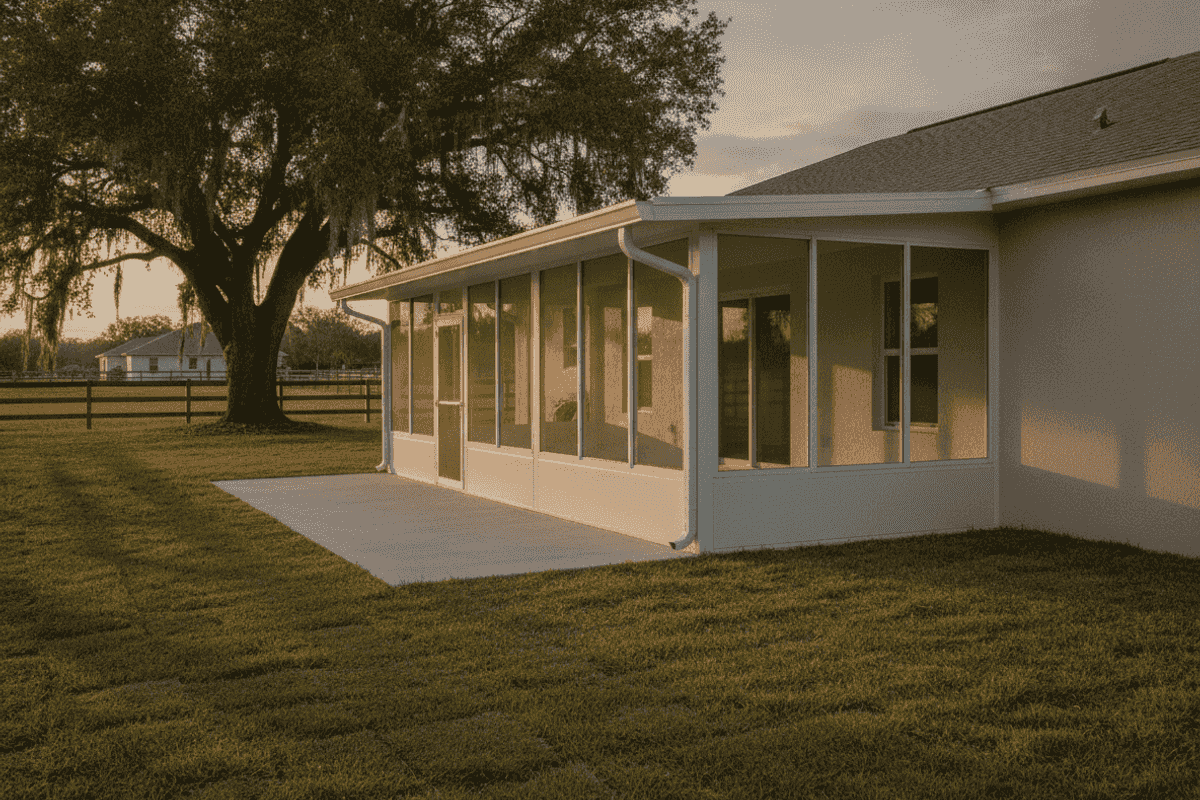
A Florida room is a glass- or vinyl-enclosed room behind a house, built to bring light inside while keeping weather outside. In Central Florida, people asking “what is a Florida room” may mean a screened lanai, a vinyl or acrylic three season room, or a fully conditioned glass sunroom. Which structure they mean decides everything that follows.
What is a Florida room?
A Florida room is a flexible name for an enclosed outdoor-living space. Different companies and property listings use the term for different structures.
One Florida room might have screens beneath an existing roof. Another might use removable vinyl or acrylic panels. A third might have insulated glass and indoor climate control.
Those rooms serve different purposes and require different construction. They also follow different budgets and permit paths.
Before requesting prices, decide what you want the room to do. That answer identifies which structure you are actually pricing.
Which structure does Florida room mean?
The phrase commonly points toward one of three outdoor-living products. Each offers a different balance of weather protection, comfort, and cost.
Screen room or screened lanai
A screen room keeps insects and debris away while preserving outdoor airflow. It remains an outdoor space rather than a weather-tight room.
Screening in an existing covered patio runs $1,500 to $3,500 around Polk County. Building the roof and screen enclosure together runs $6,000 to $14,000.
Homeowners with an existing roof can review screening in a builder-covered lanai. See screen rooms in Lakeland for the local service area.
Three season room
A three season room uses vinyl or acrylic panels instead of screen alone. Those panels provide more protection from rain, pollen, and changing weather.
Converting to a three season room runs $8,000 to $20,000 around Polk County.
This option sits between an open screen room and conditioned glass space. It adds enclosure without becoming the same product as a true sunroom.
Conditioned glass sunroom
A sunroom uses insulated glass and can be built for conditioning. It functions more like indoor living space than a screened enclosure.
A true glass sunroom runs $22,000 to $45,000 around Polk County.
Read what a sunroom really costs in Lakeland for a closer cost breakdown. For the complete decision path, compare a screen room vs three season room vs sunroom.
Florida room vs sunroom
A sunroom is one specific structure. It uses insulated glass and can be built as conditioned space.
A Florida room is the looser regional term. It might describe that sunroom, a vinyl enclosure, or a screened room.
That loose language creates confusing quotes. A wide price gap often represents two different products, not competing prices for one product.
Ask every crew to name the panel system and room type. That makes estimates easier to compare accurately.
Florida room vs lanai
A lanai is a covered outdoor space that is often screened. It remains an outdoor area connected to the house.
A Florida room is enclosed with glass or vinyl panels. That enclosure changes how the space handles weather and everyday use.
Someone may call a screened lanai a Florida room informally. However, enclosing that lanai creates a different construction project.
Review lanai cost in Polk County when considering that enclosure path.
What does Polk County require for a Florida room?
Polk County focuses on the proposed work, not the room’s nickname. Its published permit-required list includes “Screening of any space, which requires structural or infill framing to be added.”
The same list includes “Conversion of any non-habitable space to habitable space including the enclosure of garages, carports, porches or similar structures and the replacement of screening or vinyl windows with glass or solid walls.”
Replacing screen with glass or solid walls therefore needs a Polk County permit, even when the footprint never changes. Vinyl or acrylic panel conversions are not named in that clause, so do not assume either way.
The county also cautions, “These examples are not all inclusive and there will be situations that are not addressed here.”
Like-for-like screen replacement receives different treatment. Polk County’s permit-not-required list includes “Replacement of screening with like material in an existing structure.”
The Polk County screen enclosure permit path explains how these project types differ. For project-specific questions, call the Bartow office at (863) 534-6080 and ask for a plans examiner.
Frequently asked questions
Is a Florida room the same as a sunroom?
Not necessarily. A sunroom specifically uses insulated glass and can be built for conditioning, while a Florida room may describe several enclosure types.
How much does a Florida room cost in Polk County?
It depends on which structure the phrase means to you. A screen room runs $1,500 to $3,500 on an existing covered slab, or $6,000 to $14,000 with a new insulated roof. A three season room runs $8,000 to $20,000, and a true glass sunroom runs $22,000 to $45,000.
Do I need a permit to turn my lanai into a Florida room?
Yes, when the project replaces screen with glass or solid walls. Polk County’s published permit-required list names that conversion. Vinyl panel conversions are not named in the same clause, so call the Bartow office at (863) 534-6080 before assuming an answer.
What is a Florida room kit?
A Florida room kit is a retail package containing enclosure panels and related components. The kit does not resolve project-specific anchoring, engineering, or permit requirements.
Can I start with a screen room and upgrade later?
Yes, some projects can follow a planned upgrade path. Compare the room types in the screen room, three season room, and sunroom guide before choosing the first structure.
Get matched with a local aluminum crew
Call (863) 777-5379 for a free on-site measure. Describe what you want the room to do, and the crew will tell you which of the three you are actually pricing.
We connect Polk County homeowners with insured local aluminum crews. The matched crew handles the licensed work and pulls its own permits.