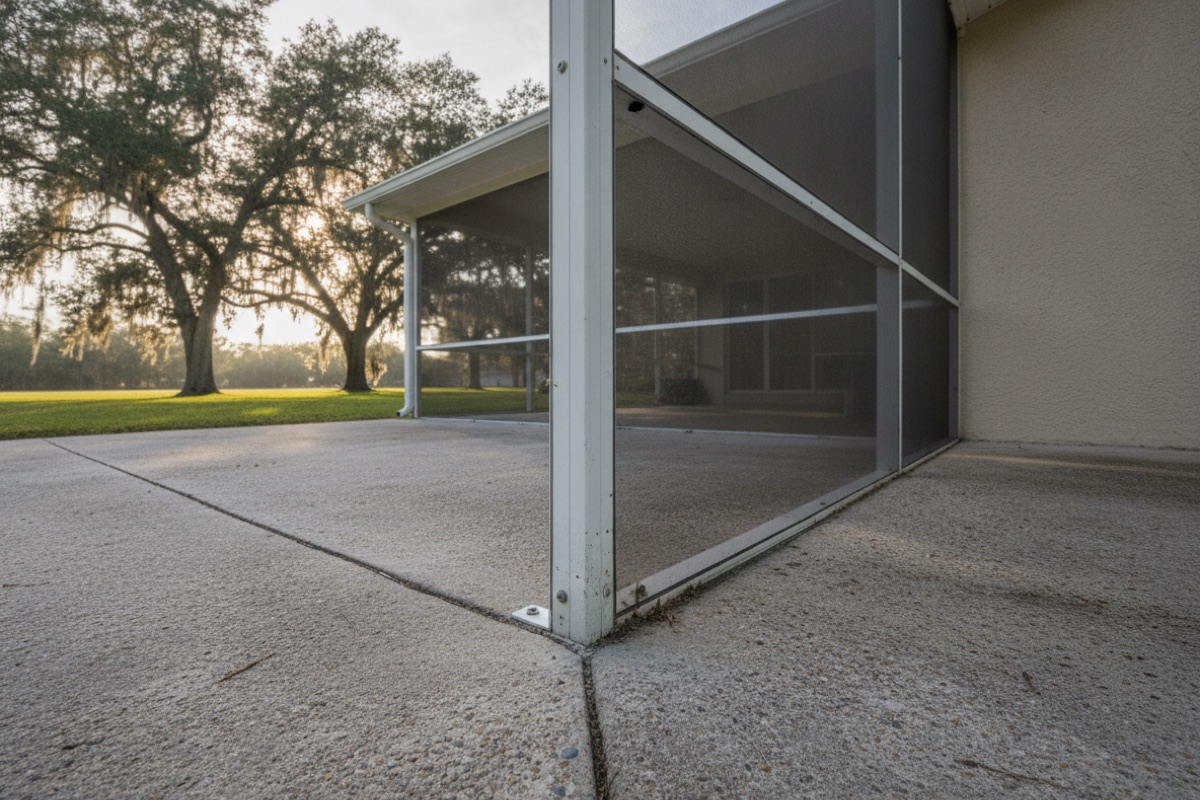
An after-the-fact permit is the ordinary building permit, applied for after the structure is already standing. It is a new permit question. It is not the same as an open permit, an expired permit, or a search that simply did not locate a record.
Polk County Resolution 17-025, adopted April 18, 2017 and effective July 3, 2017, prices residential building permits from a valuation table that expressly includes accessory structures that are “new and existing.” Those published figures are permit-only amounts. They are not total legalization, engineering, documentation, or construction cost, and they are not proof there is never another fee.
The hard part is still the proof. Closed-up posts, anchors, and slab connections can take drawings, access, and reinspection to evaluate.
Was the permit open, expired, or never located?
These are different conversations with the issuing agency:
| What you are looking at | What it means | What it does not mean |
|---|---|---|
| Open permit | Someone applied, and the permit has not been closed | The work is finished, or that Florida requires a new permit |
| Expired permit | A permit was issued and later expired before closure | Automatic closure, or a right to keep building on that permit |
| Permit applied for but not closed | There is an application on file that was left open or expired | Amnesty for never-permitted work, or that every later owner is in the clear |
| No located permit | The search you ran did not return a matching record | That nobody applied, that the work was illegal, or that no other issuer has a file |
| New permit question | The agency is being asked to permit standing work | That an after-the-fact filing is the only path, or that approval is guaranteed |
A blank search is not proof. Record coverage, issuer, address history, annexation, spelling, date, and record type can all hide a file that exists. Use the Polk County permit search guide to run that lookup carefully. This page is for what to do once you know which of those situations you are in.
When can an expired permit be closed without a new one?
Section 553.79(16)(b), Florida Statutes, addresses substantially completed expired permits. If the local enforcement agency determines the permit’s requirements were substantially completed, the expired permit may be closed without a new permit. The work needed to close it may follow the code in effect when the agency received the application, unless the contractor has sought and received agency approval for an alternative material, design, or method.
That closure is not automatic. The agency makes the substantial-completion call.
Section 553.79(16)(c) says an agency may close a permit six years after issuance, even without a final inspection, if it determines no apparent safety hazards exist. “May” is discretion. It is not a homeowner entitlement after six years.
If no permit was applied for, those closure paths do not create a file that was never opened. That is the after-the-fact question.
Does Florida protect buyers from previous unpermitted work?
Section 553.79(17)(a) does not protect buyers from work for which no permit was applied. It addresses a permit applied for by a previous owner and left unclosed.
The statute states:
“A local enforcement agency may not deny issuance of a building permit to; issue a notice of violation to; or fine, penalize, sanction, or assess fees against an arms-length purchaser of a property for value solely because a building permit applied for by a previous owner of the property was not closed. The local enforcement agency shall maintain all rights and remedies against the property owner and contractor listed on the permit.”
The scope is narrow. It takes an arms-length purchaser for value, a prior owner’s application, a permit that was not closed, and agency action solely on that basis. It is not amnesty for never-permitted work, hazards, or unrelated violations.
A visible enclosure and a blank search are not the same facts as an expired permit. Sellers working through that difference should read selling a house with an unpermitted enclosure.
What does Resolution 17-025 actually publish?
Resolution 17-025’s residential building-permit table includes new and existing accessory structures. Its scope language states:
“Applies to : One and Two Family Residential additions, alterations, repairs; accessory structures (new and existing) which are erected alterations, repairs and additions such as (but not limited to): carports, garages, storage buildings, pools, screen rooms, glass rooms, reroofs, roof overs, etc. This is a building permit only fee based on the valuation of the work according to the residential table.”
Published residential building permit fee examples from that schedule include:
| Work valuation | Residential building permit fee |
|---|---|
| Up to $12,000 | $85.00 |
| $14,001 to $15,000 | $103.13 |
| $49,001 to $50,000 | $301.35 |
The same schedule lists a $110.00 research fee and a $35.00 reinspection fee. These are permit-only amounts from the published 2017 resolution. They are not current market prices, not a total legalization budget, and not proof there is never another fee.
A 2025 follow-up audit describes Resolution 17-025 as the original rate resolution and addresses selected invoicing issues. It is not a complete September 2026 certification of every fee or amendment.
The resolution says, “All Construction Permit Fees are due at time of permit issuance.” Confirm current line items with the issuing agency for the property. Our Polk County impact fees guide is a separate schedule question, not part of these permit-only rows.
Why can documentation outweigh the permit fee?
A new project can be reviewed through plans and visible construction stages. Finished work may conceal the connections an inspector needs.
For an enclosure, that can include posts, anchors, beams, attachment points, and the slab edge. Closed finishes may block a clear view of those details. Drawings and existing conditions also need to agree. The screen enclosure wind-load drawing guide explains that part of a normal permit package.
The published permit fee follows a table. The proof depends on what can be verified at the property.
Do not treat the under-$7,500 permit exemption as a shortcut around that question. F.S. 553.79(1)(g) requires a written request and scope/value evidence. It excludes flood-hazard property and electrical, plumbing, structural, mechanical, or gas work. Projects cannot be split to evade it. Enclosure work cannot be labeled exempt without resolving that exact scope.
The screen enclosure permits guide is a place to organize the next step. It is not a substitute for the issuing agency’s current rules.
How much of the house can an inspector examine?
Section 553.79(21)(a) limits unrelated inspection as a condition of issuing a one-family or two-family residential permit. The agency may not require, as that condition, inspection of a portion of the building, structure, or real property that is not directly impacted by the work the permit is sought for.
That limit does not shield the enclosure itself. Posts, anchors, connections, and the supporting slab for the work being permitted remain in scope.
The subsection does not apply to a permit sought for:
- A substantial improvement as defined by Section 161.54, Florida Statutes, or by the Florida Building Code.
- A change of occupancy as defined by the Florida Building Code.
- A conversion from residential to nonresidential or mixed use.
- A historic building as defined by the Florida Building Code.
That last exception turns on the code definition of a historic building. It is not the same question as whether a parcel carries some other historic designation.
The law also preserves other powers. An official may cite a violation inadvertently observed in plain view during an ordinary inspection. An official may inspect a physically nonadjacent area that is directly impacted by the work. The agency may inspect areas when the person controlling them voluntarily consents. Inspection warrants under Sections 933.20 through 933.30 remain available.
Subsection (21)(d) contains a conditional repeal tied to a Florida Building Code amendment certification. This page does not say whether that certification has occurred.
Who can apply for the permit?
Lakeland Outdoor Pro is a referral network. It does not hold the trade license and does not pull permits.
A contractor listed on a permit pulls that permit under that contractor’s own license. A qualifying property owner may use Florida’s owner-builder path. That choice brings direct supervision and disclosure responsibilities. Using a licensed contractor does not erase every sale, permit, or disclosure issue.
The permit scope also needs the correct contractor classification. See screen enclosure contractor license classes.
Frequently asked questions
Can you get an after-the-fact permit in Florida?
You can apply for a building permit after construction is standing. Resolution 17-025’s published table covers “new and existing” accessory structures as permit-only fees. Approval is not guaranteed. The issuing agency decides each application.
Is an after-the-fact permit fee automatically doubled?
The published Resolution 17-025 residential table is a valuation-based building-permit schedule. Those rows are not total legalization cost, and they are not proof there is never another fee. Ask the issuing agency how current line items apply to the property.
Does a blank permit search prove the enclosure is unpermitted?
No. A blank search does not prove that nobody applied, that the work was illegal, or that every issuer was checked. Coverage, issuer, address history, annexation, spelling, date, and record type can all matter.
Does Florida protect me when the previous owner built it?
Section 553.79(17)(a) protects an arms-length purchaser for value in a narrower situation: a previous owner applied for the building permit and left it unclosed, and the agency is acting solely on that basis. The paragraph does not reach work for which no permit was applied, and it does not wipe out hazards or unrelated violations.
Can the referral service pull the permit for me?
No. Lakeland Outdoor Pro is a referral service, not the contractor. Ask whether any matched crew will pull a needed permit under its own license. A qualifying owner can instead consider the owner-builder process.
Get help with an existing Polk County enclosure
Start with the service matching the structure: a screen room, enclosure repair, or pool cage. Homeowners can also review our Lakeland outdoor living service area. Compare the structure against the normal screen enclosure permit path or the sunroom permit categories when the materials and use are still being sorted out.
Call (863) 777-5379 to discuss the structure. Lakeland Outdoor Pro connects you with licensed and insured local crews.